Make building approachable
A non-engineer should be able to go from idea to a working agent, not a ticket to an engineering team.
Augment Group is building an AI operating system for institutions, funds, enterprises, sovereigns, and infrastructure operators, where agents act and a human stays in the loop. We designed the platform underneath: how an agent gets created, configured, tested, and trusted.
Institutions are racing to put agents into real workflows: lease review, outage response, diligence, reporting. Most tools force a binary choice, a rigid off-the-shelf chatbot, or a blank canvas that only an engineer can use.
Augment Group’s platform had to hold both ends at once: simple enough for an operations lead to spin up an agent from a template, and precise enough to encode multi-step logic and integrations underneath, all without losing anyone’s trust along the way.
A non-engineer should be able to go from idea to a working agent, not a ticket to an engineering team.
Logic-heavy agents, call routing, transfers, conditional branches, still need node-level control for the people who need it.
Before an agent touches a real customer or a real lease, someone needs to test it, watch it, and know exactly what it will do.
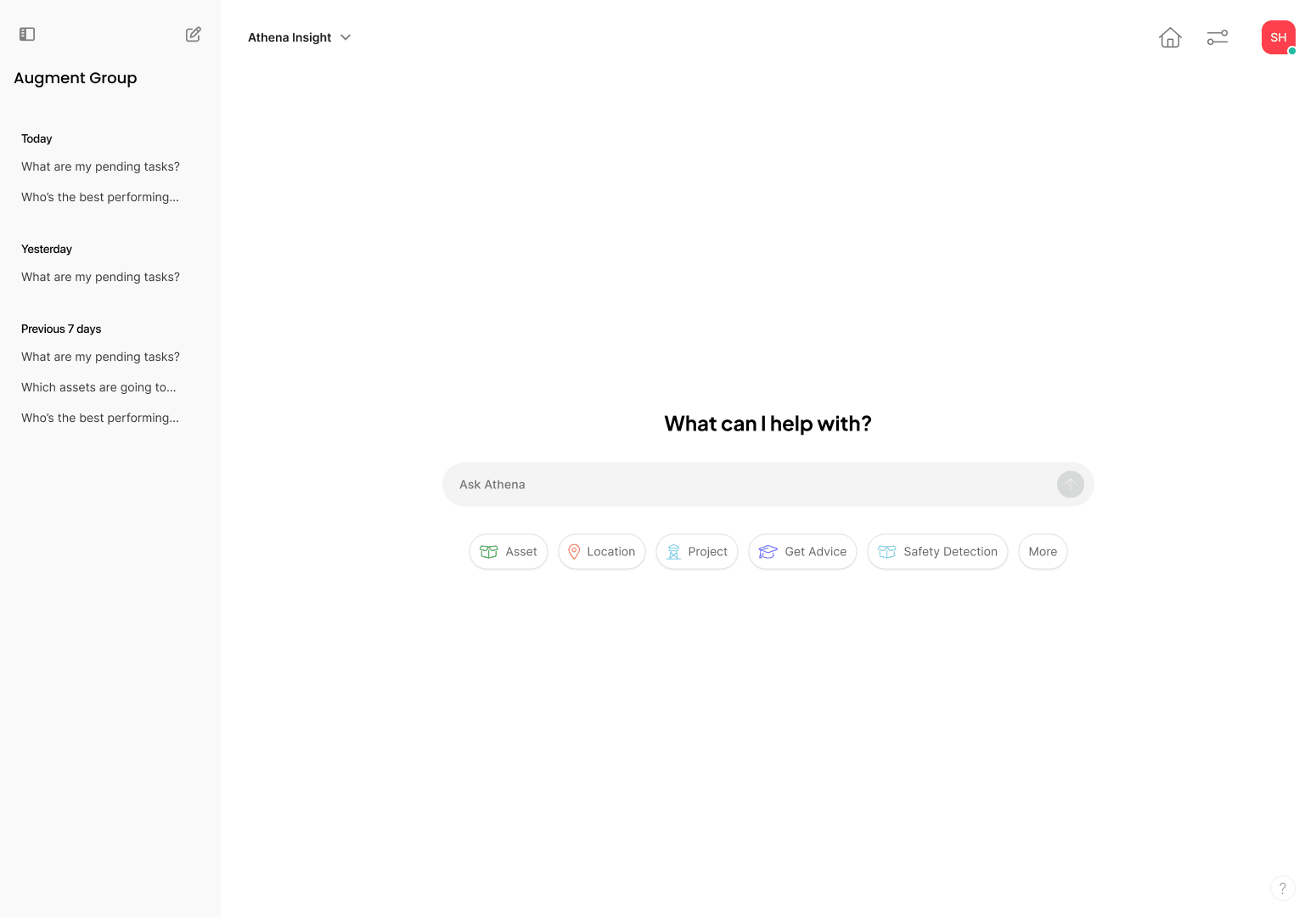
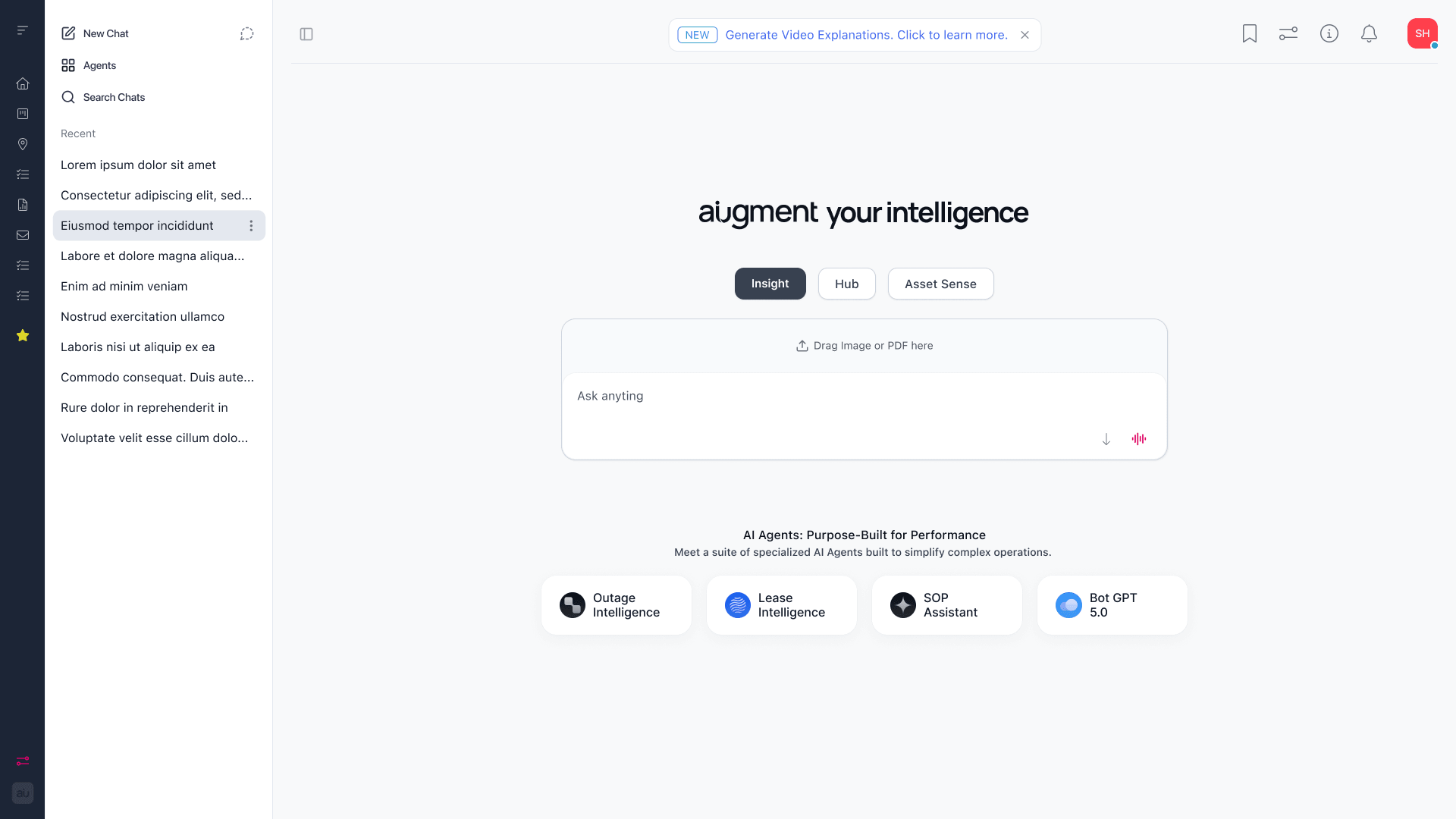
Athena Insight, one of the platform’s early agents, opened to a bare prompt and a handful of buttons. Powerful underneath, but nothing on screen told a new user what to ask or what the agent could actually do.
The same visual language and interaction patterns run underneath the builder, the workflow canvas, and every vertical copilot built on top of it.
We started with the moment that matters most, creating an agent, and worked outward: how it gets a voice, how its logic gets built, where it lives once it’s live, and how the platform proves it’s working before anyone trusts it with something real.
The same components carry the weight everywhere else on the platform: a chat surface for infrastructure operators reading fault data, a lease copilot summarizing risk, a document analyzer pulling structured fields out of a folder of site photos and PDFs.
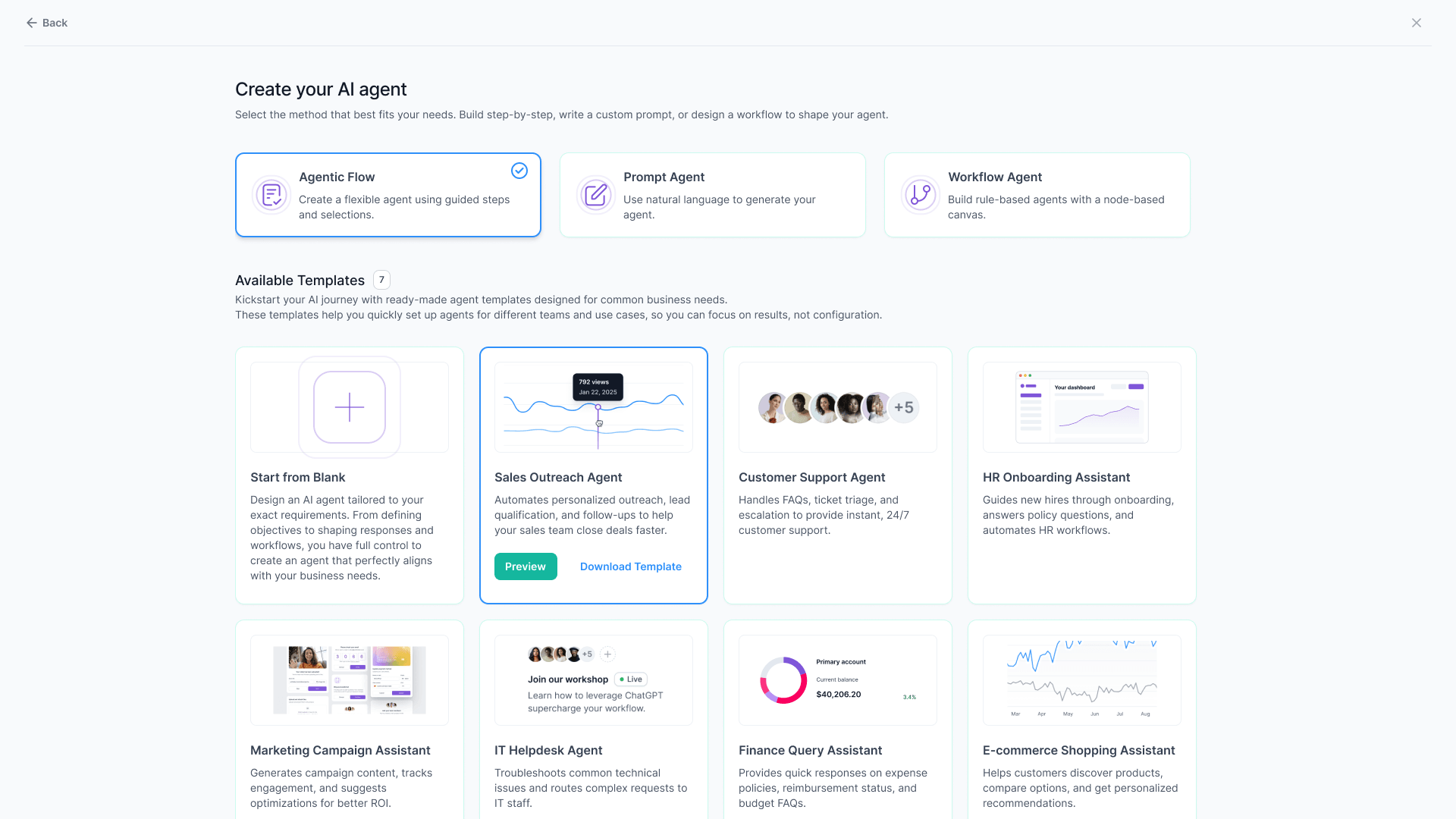
An agent starts as a guided flow, a natural-language prompt, or a node-based workflow, plus seven ready-made templates, sales outreach, support, HR onboarding, IT helpdesk, and more, so most teams never start from a blank page.
Purpose, character, tone, and guardrails are all plain-language fields, with a live test panel next to the editor, so a change is one click from being heard, not just read.


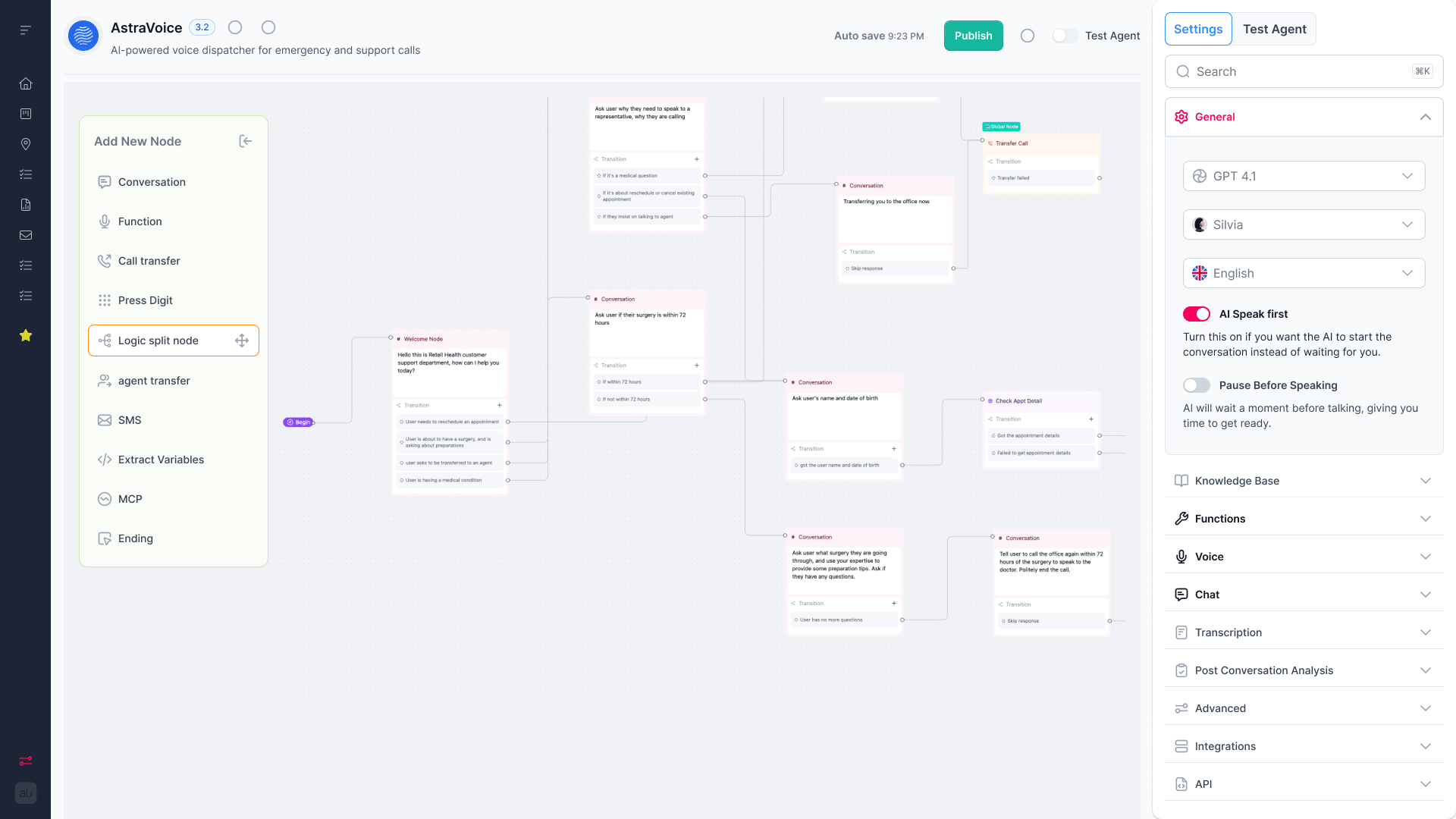
For agents that need branching logic, call transfers, or system actions, the same builder opens into a node canvas: conversation, function, logic split, SMS, every step laid out where it can be traced and edited directly.
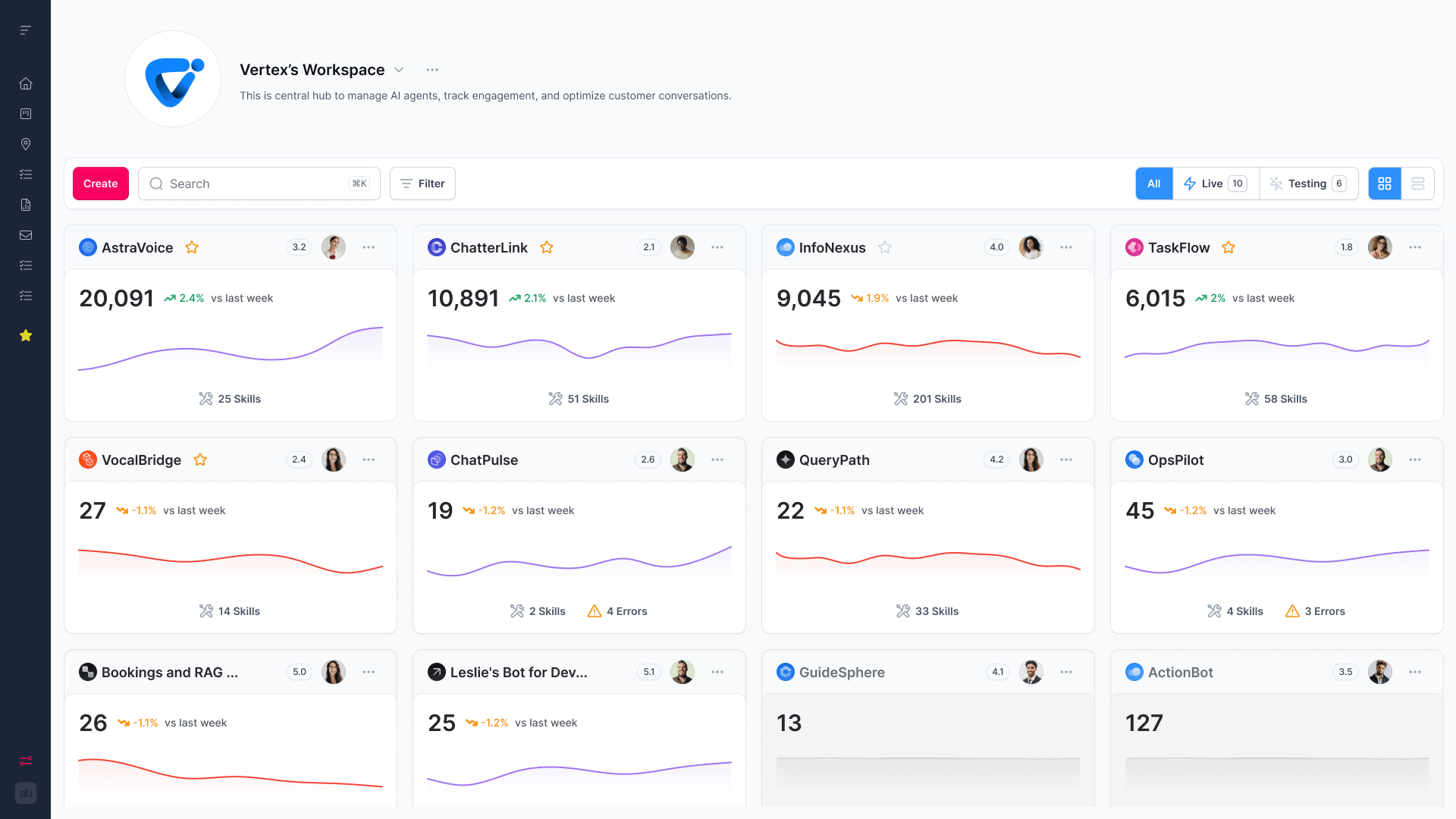
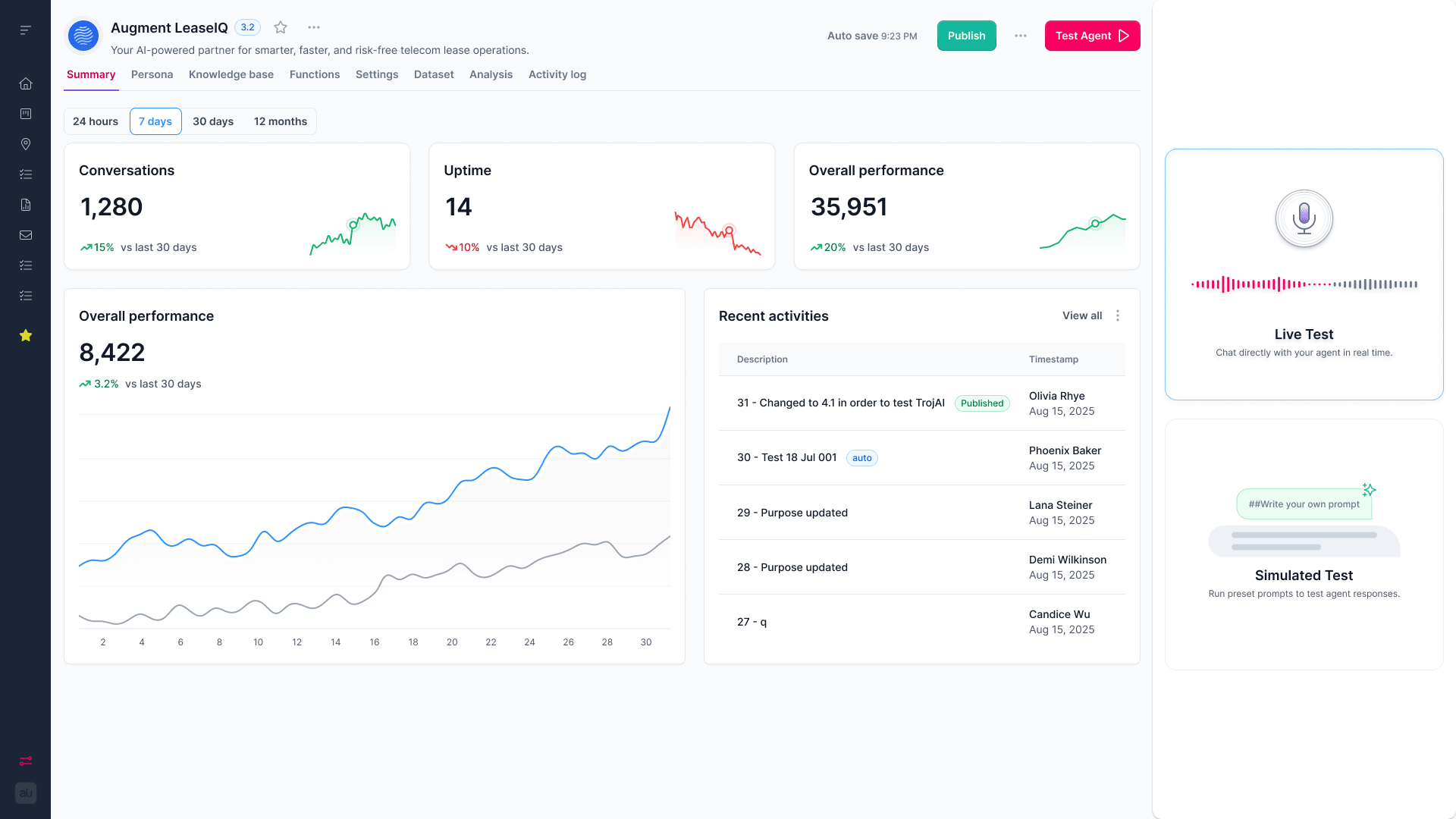
Every agent an organization runs, voice, chat, or workflow, lands in one workspace: live status, weekly trend, skill count, and a single Create button, so scale never turns into clutter.
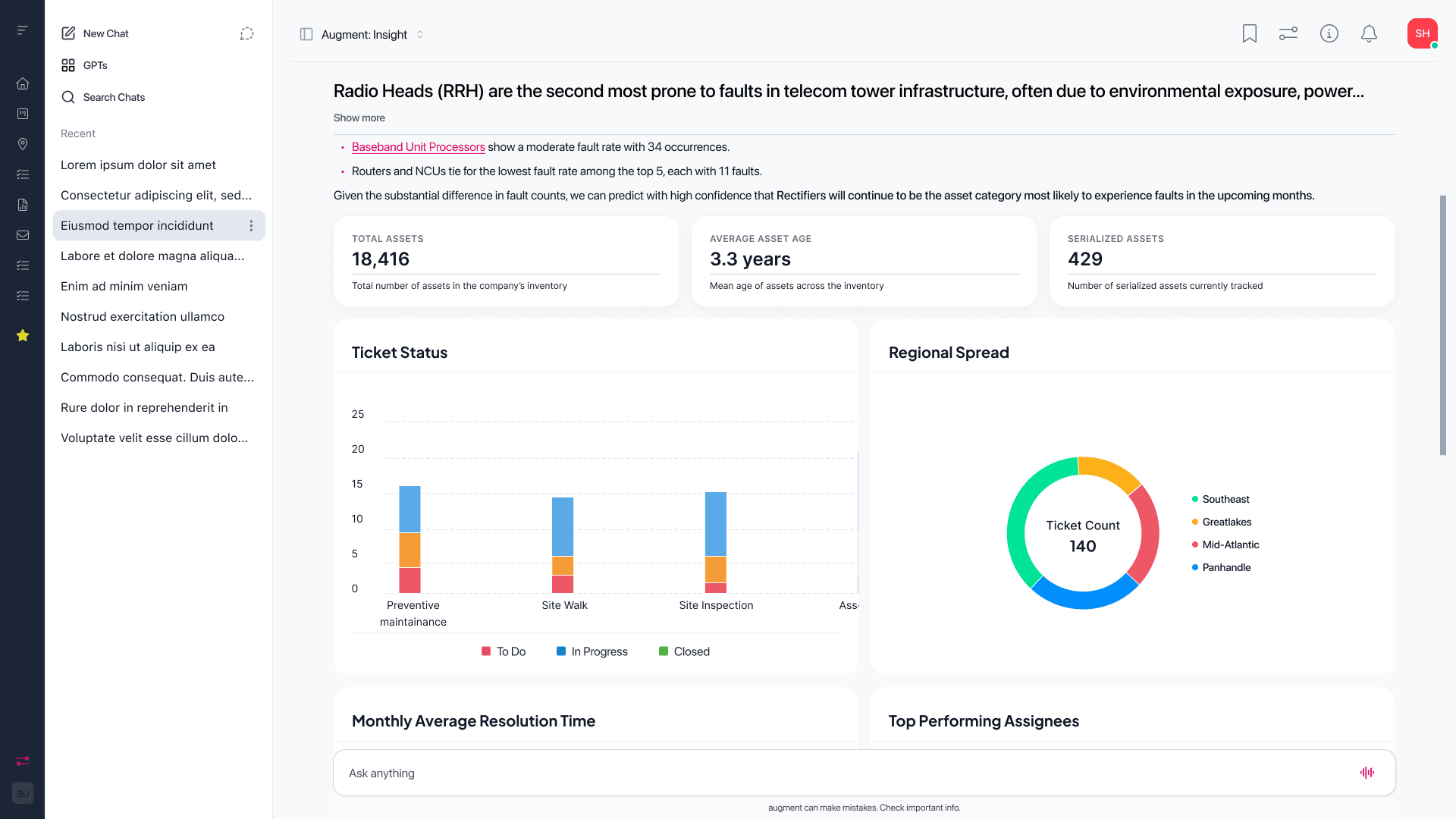
The design system carries straight into the copilots Augment Group ships to end users: one entry point across Insight, Hub, and Asset Sense, and a chat surface that turns raw infrastructure data, fault rates, ticket status, regional spread, into an answer with the numbers attached.
A document analyzer walks a non-technical user through defining an extraction template, then an AI prompt, so uploading a folder of tower site photos and PDFs turns into structured, exportable fields instead of a manual review.


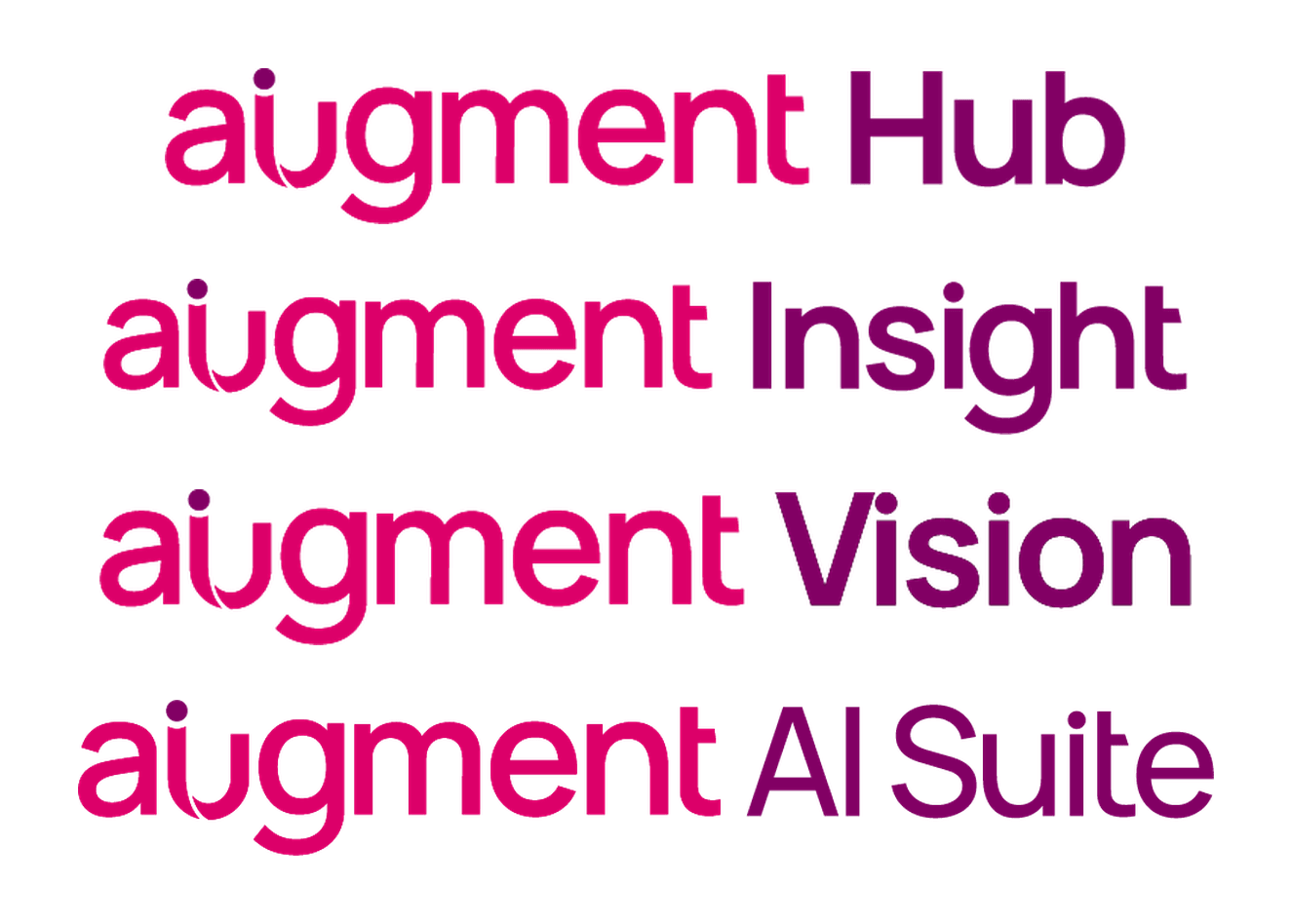
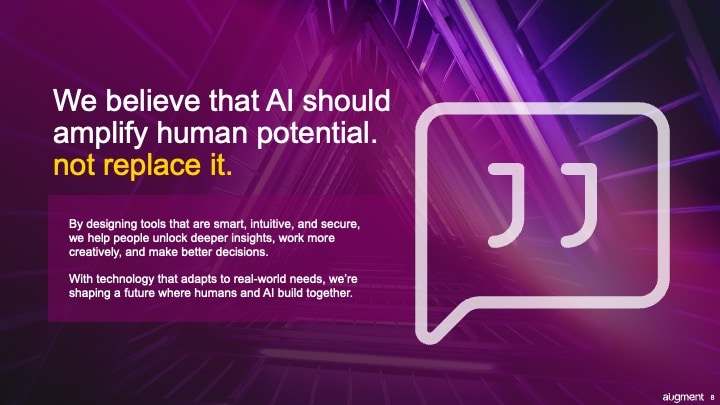
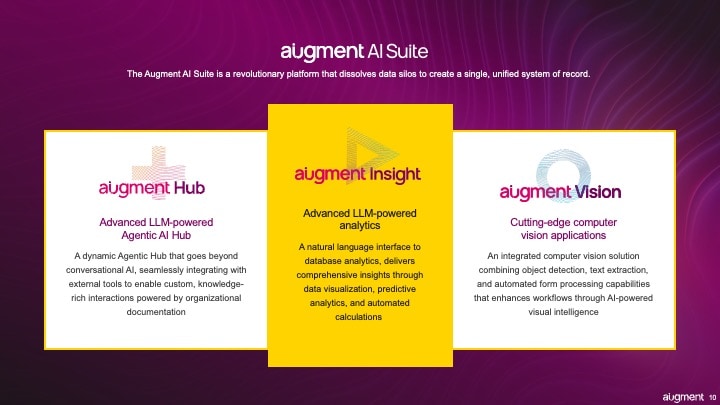
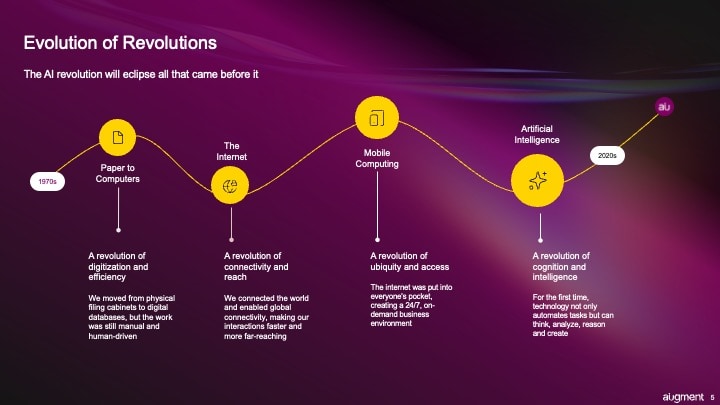
We built out the Augment Group brand across the product line: a house mark in pink and purple, a distinct wordmark for each product, Hub, Insight, Vision, AI Suite, a gradient identity for hero art and social, and the pitch deck that introduces the platform to investors and partners.


Augment Group is shipping new agents and copilots on the same builder, editor, and dashboard patterns we designed, rather than a new interface for every product line.
This reflects what’s shipped to the platform so far, not a claim about everything on Augment Group’s roadmap.
Product names and screens reflect Augment Group’s platform at the time of this writing. Visit Augment Group.
Building the interface for an AI platform?
Bring the model and the workflows. We'll help you design the interface that makes it usable, and safe, for the people who have to rely on it.